
Witnessing Tidewater Glaciers: The Science Behind Glacier Calving and Climate Tracking
Alaska is a region of unparalleled natural beauty and dramatic scenery, where wildlife roams undisturbed across vast landscapes. But, the exciting fauna is not what drives many of the visitors to the Last Frontier.
It’s the state’s glaciers that really capture the imagination that choose to venture this far north.
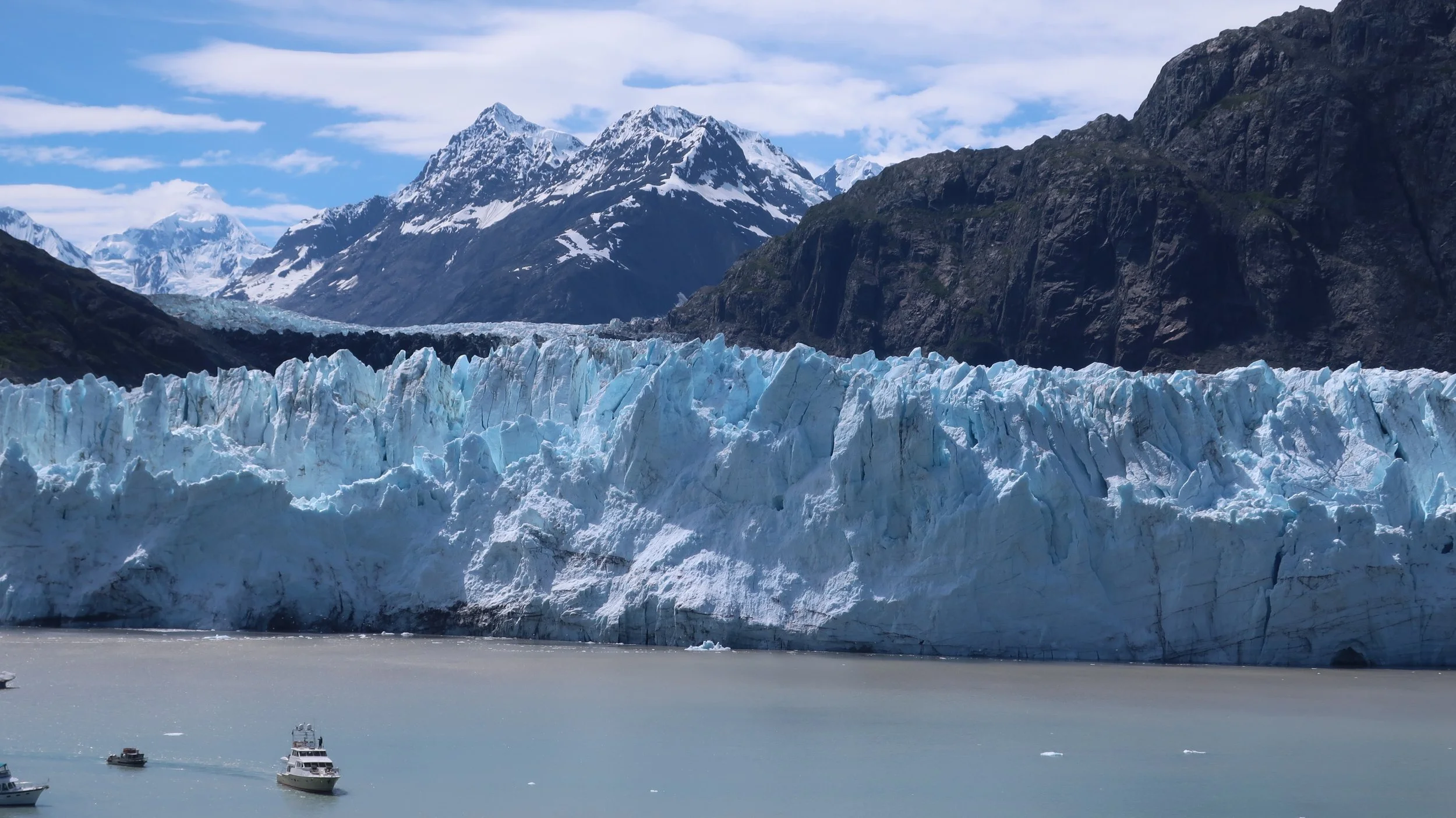
These Alaskan glaciers — towering sheets of ice, more than 100,000 in number, and some 200’ft high — are packed into relatively small area of 75,000 square kilometres.
Seeing these great blocks of ice break off and calve into the sea delivers unforgettable moments for visitors to this awe-inspiring corner of the world.
The raw power of nature at it’s true pinnacle.
About Alaska’s Tidewater Glaciers
Tidewater glaciers are formed on land but terminate in bodies of water, where they break loose or ‘calve’, producing the floating chunks of glacier ice we all know well as icebergs.
Quick note - If you want to see this up close with your own eyes, an Alaskan cruise provides unparalleled opportunities for guests for glacier excursions and witnessing the spectacular phenomenon of the tidewater glaciers of Glacier Bay and Kenai.
When tidewater glaciers calve icebergs into the marine environment, the icebergs then serve as the molting and breeding ground for some of the largest colonies of harbor seals in Alaska. This important habitat for seals protects them from predators such as orca, and provides essential nursing grounds.
Sadly, due to climate change, most of the ice sheets that feed these glaciers are thinning, which has resulted in the retreating of many tidewater glaciers, thereby causing as yet little understood impacts on the seals that rely on tidewater glacier habitat for critical life-history events.
Tidewater Glaciers and Climate Change
Glaciers and ice sheets are awe-inspiring and beautiful but they also affect us through their connections with the oceans and sea levels, and availability of fresh water resources.
Unfortunately, most of Alaska’s glaciers have been retreating over the last century and studies have revealed that this rate of recession has only increased in recent years.
These glaciers, which can be seen as vertical cliffs in the ocean, have begun to loose ice through both melting and calving — that previously mentioned process whereby massive chunks of ice break off into the water.
This effect of melting glaciers has severely impacted freshwater flows, vegetation and coastal marine ecosystems. Moreover, glacier meltwater has chemical properties that can cause a reduction in pH levels in the ocean and makes the seawater more acidic. This acidification can have an adverse impact on marine life and their habitat.
Underwater melting has also resulted in increased calving, just like chipping away the base of a building without toppling it.
Calving Impact Goes Beyond Sea Level Rise
Apart from increasing sea levels, the fresh water which enters the ocean from the melting of these glaciers stirs up nutrients that are locked deep inside the water.
These nutrients feed the zooplankton and phytoplankton near the surface and spur population booms which impact the ecosystem as well.
Changes in tidewater glaciers can also have an impact on the people living near the coastal areas of Alaska, because altering of patterns in ocean water can seriously effects sources of food and livelihood for many, such as fewer salmon swimming upstream each year.
Tidewater Glaciers Are More Sensitive to Climate Change Than Previously Thought

When tidewater glaciers melt and contribute to rise in sea levels, the rate at which they melt is still unknown. Studies show, that as ocean temperatures rise, sea levels could rise faster than expected.
Therefore, it is crucial for coastal communities to improve these sea level estimates to prepare for the effects of climate change, as a minor increase in sea level can exacerbate storms tidal waves. In temperate latitudes, tidewater glaciers can be among the fastest flowing in the world and their high speed allows them with a high capacity to sculpt and carve the landscape.
Where Does This Leave Us?
Alaskan tidewater glaciers offer some of the most dramatic scenic views found anywhere on Earth, but their future is far from certain. Evolving evidence clear demonstrates that continuing climate impact threatens both them and the ecosystems that rely on them.
If you dream of seeing this spectacle up-close, an Alaskan glacier cruise through the shimmering turquoise waters and towering fjords of the Last Frontier is well worth considering sooner than later.